
Crypto trading can look like chaos to outsiders. Prices can rise or fall by more than 10 percent in a single day and news can shake the market in minutes. Most people guess or react too late. But some traders actually thrive in this storm and it is not just luck. They use seven proven tactics that flip market uncertainty into real opportunity.
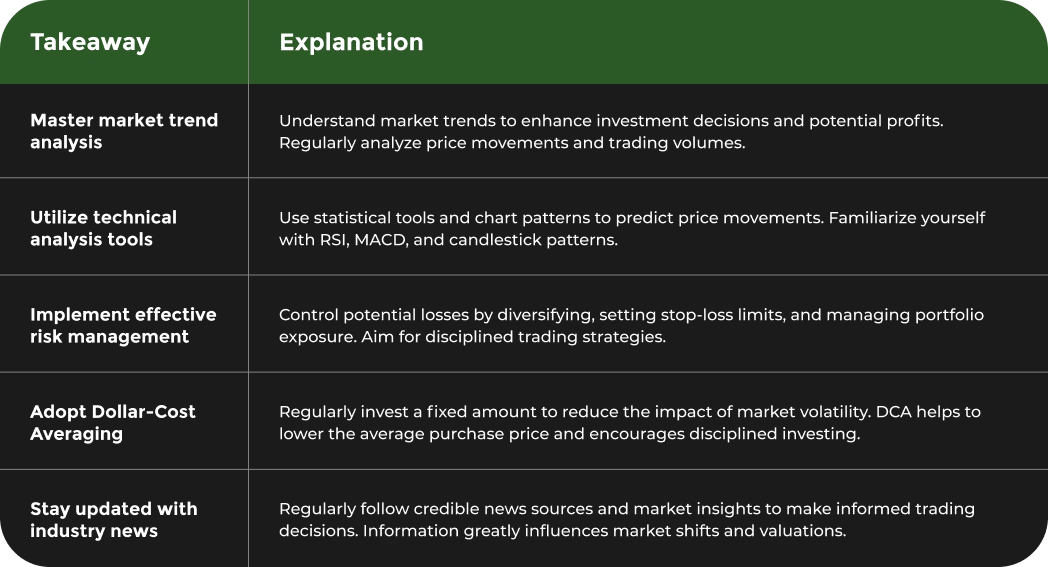
Successful crypto trading demands a sophisticated understanding of market trends and comprehensive analysis techniques. Traders who master trend identification and interpretation can significantly improve their investment decision making and potential profitability.
Cryptocurrency markets are highly volatile and complex environments that require continuous learning and strategic observation. Market trends represent the overall direction in which asset prices are moving, whether upward (bullish), downward (bearish), or remaining relatively stable.
Key considerations for understanding market trends include:
Traders must develop robust analytical skills that combine technical analysis, fundamental research, and sentiment evaluation. Technical analysis involves studying statistical trends gathered from trading activity, such as price movements, chart patterns, and trading volumes. Fundamental analysis focuses on evaluating intrinsic value by examining underlying economic factors, technological innovations, regulatory environments, and project fundamentals.
According to research published on SSRN, cryptocurrency markets demonstrate significant reactions to regulatory events and market sentiment. This underscores the importance of comprehensive trend analysis that goes beyond simple price tracking.
Successful trend analysis requires leveraging multiple information sources, including cryptocurrency exchanges, financial news platforms, social media sentiment, and specialized market research reports. Traders who integrate diverse data points can develop more nuanced and accurate market predictions.
Professional crypto traders typically employ advanced tools and platforms that provide real time data visualization, advanced charting capabilities, and algorithmic trend detection. These resources help investors identify potential market movements and make more informed trading decisions.
Ultimately, understanding market trends is an ongoing process of continuous learning, adaptability, and strategic observation in the dynamic world of cryptocurrency trading.
Technical analysis represents a critical skill set for crypto traders seeking to understand market movements and predict potential price trajectories. This systematic approach involves analyzing statistical trends generated from trading activity to make informed investment decisions.
Cryptocurrency traders utilize multiple analytical tools and techniques to interpret market behavior. Key components of technical analysis include:
Professional traders recognize that technical analysis goes beyond simple price tracking. It involves complex interpretations of market psychology, investor sentiment, and historical price movements. Traders must develop sophisticated skills in reading candlestick charts, recognizing trend lines, and understanding oscillator indicators.
According to research published on ResearchGate, technical analysis in cryptocurrency markets provides valuable insights into potential price movements and trading opportunities. This approach helps traders make data driven decisions by transforming raw market data into actionable intelligence.
Effective technical analysis requires proficiency in several fundamental tools:
Successful crypto traders integrate multiple indicators to create more robust analytical frameworks. No single indicator provides a complete market picture, so comprehensive analysis demands a multifaceted approach.
Modern traders leverage advanced software platforms and algorithmic tools that can quickly process complex market data, generate visual representations of trends, and provide real time analytical insights. These technological solutions enable faster, more precise decision making in the rapidly evolving cryptocurrency markets.
Continuous learning and practice remain essential. Technical analysis is both an art and a science, requiring traders to constantly refine their skills, adapt to changing market conditions, and develop intuitive understanding of market dynamics.
Fundamental analysis represents a comprehensive approach to evaluating cryptocurrency investments by examining underlying factors that influence their intrinsic value. Unlike technical analysis, fundamental analysis digs deeper into the core characteristics and potential of digital assets.
Successful crypto traders understand that fundamental analysis encompasses a wide range of critical evaluation metrics. These metrics help investors make informed decisions beyond simple price movements.
Key fundamental analysis considerations include:
Blockchain technology and network metrics play a crucial role in fundamental assessment. Traders examine factors such as transaction volumes, network activity, mining difficulty, and protocol development progress to gauge a cryptocurrency’s underlying strength and potential growth.
According to research investigating fundamental analysis in the Bitcoin market, fundamental factors significantly influence cryptocurrency trading opportunities and market prospects.
Essential elements of comprehensive fundamental analysis include:
Investors must develop a holistic approach that combines quantitative data with qualitative assessment. This means looking beyond numbers to understand the broader ecosystem, technological potential, and long term viability of a cryptocurrency project.
Advanced fundamental analysis requires continuous learning and staying updated with rapidly evolving blockchain technologies, market trends, and global economic conditions. Successful traders integrate multiple information sources, including academic research, industry reports, developer activity, and community engagement metrics.
Ultimately, fundamental analysis is about understanding the intrinsic value and future potential of cryptocurrency projects, moving beyond short term price speculation to comprehensive investment strategy.
Risk management represents the cornerstone of sustainable cryptocurrency trading, protecting investors from potential financial catastrophes in an inherently volatile market. Successful traders recognize that effective risk management is not about eliminating risk, but strategically controlling and mitigating potential losses.
Cryptocurrency markets demand a disciplined approach to risk, requiring traders to implement comprehensive strategies that protect their investment capital while maintaining potential for growth. Understanding and managing risk becomes paramount in an environment characterized by extreme price fluctuations and unpredictable market dynamics.
Key risk management principles include:
Position sizing emerges as a critical component of risk management. Professional traders typically limit individual trade exposure to a small percentage of their total portfolio, often between 1% to 5% per trade. This approach prevents catastrophic losses from a single unsuccessful investment.
According to research from the Bank for International Settlements, comprehensive risk management in cryptocurrency markets requires monitoring liquidity risks and establishing clear risk limits.
Essential risk mitigation strategies encompass:
Emotional control represents an often overlooked but crucial aspect of risk management. Successful traders develop psychological resilience, avoiding impulsive decisions driven by fear or greed. This requires cultivating a disciplined mindset that prioritizes long term strategy over short term emotional reactions.
Advanced risk management also involves continuous learning and adaptation. Traders must stay informed about market trends, regulatory changes, technological developments, and global economic factors that could impact cryptocurrency valuations.
Ultimately, effective risk management transforms trading from gambling to a calculated, strategic approach to wealth generation in the dynamic world of cryptocurrency investments.
Dollar-Cost Averaging (DCA) emerges as a powerful investment strategy that enables cryptocurrency traders to mitigate market volatility and reduce the psychological stress associated with timing market entries. This methodical approach involves consistently investing a fixed amount of money at regular intervals, regardless of asset price fluctuations.
The core principle of DCA is remarkably straightforward yet profoundly effective. By spreading investments across multiple time points, traders can smooth out the impact of market volatility and potentially lower their average purchase price over time.
Key advantages of Dollar-Cost Averaging include:
Cryptocurrency investors find DCA particularly compelling due to the market’s inherent unpredictability. Instead of attempting to perfectly time market peaks and valleys, traders systematically invest predetermined amounts at consistent intervals.
According to research examining advanced DCA strategies, sophisticated variations of Dollar-Cost Averaging can potentially optimize long term investment returns by dynamically adjusting investment amounts based on market conditions.
Practical implementation of DCA requires careful planning:
Automation technologies have significantly enhanced DCA’s accessibility, allowing investors to set up recurring purchases across various cryptocurrency exchanges and investment platforms. These tools enable seamless, hands off investment strategies that reduce manual intervention and emotional trading decisions.
Successful DCA implementation demands discipline and commitment. Investors must resist the temptation to deviate from their predetermined strategy during market turbulence. The strategy’s power lies in its consistency and ability to average out market fluctuations over extended periods.
Ultimately, Dollar-Cost Averaging transforms cryptocurrency investing from a speculative activity into a structured, methodical approach to wealth accumulation, offering a pragmatic solution for managing risk in an inherently volatile market.
Swing and day trading represent sophisticated cryptocurrency trading approaches that demand precise timing, deep market understanding, and exceptional risk management skills. These strategies focus on capitalizing on short term price movements, distinguishing themselves from long term investment approaches.
Day trading involves executing multiple trades within a single trading day, seeking to profit from minute price fluctuations. Swing trading, conversely, involves holding positions for several days or weeks, targeting larger price movements while avoiding the intense monitoring required by day trading.
Critical skills for successful swing and day trading include:
Cryptocurrency markets present unique challenges for swing and day traders, characterized by extreme volatility and 24/7 trading environments. Successful traders must develop robust strategies that account for rapid market shifts and unexpected news events.
According to research exploring advanced trading techniques, emerging technologies like reinforcement learning are transforming how traders approach short term market strategies, offering more sophisticated decision making frameworks.
Essential components of effective swing and day trading strategies include:
Professional traders recognize that successful swing and day trading extends beyond simple price prediction. It requires a holistic approach integrating technical analysis, market sentiment evaluation, and psychological resilience.
Modern traders leverage sophisticated algorithmic tools and platforms that provide real time market data, advanced charting capabilities, and rapid execution technologies. These technological solutions enable faster, more precise trading decisions in the complex cryptocurrency ecosystem.
Ultimately, mastering swing and day trading demands continuous learning, adaptability, and a disciplined approach to navigating the dynamic and unpredictable world of cryptocurrency markets.
Staying informed represents a critical component of successful cryptocurrency trading, enabling investors to make strategic decisions based on current market insights and emerging trends. Cryptocurrency markets move at an unprecedented pace, with developments that can dramatically shift asset valuations within hours.
Informed traders recognize that knowledge is a powerful investment tool. The ability to quickly interpret and respond to breaking news can mean the difference between significant profits and substantial losses.
Key information sources for cryptocurrency traders include:
Global regulatory changes, technological innovations, and macroeconomic shifts can profoundly impact cryptocurrency markets. Traders must develop a comprehensive approach to gathering and analyzing information from diverse, credible sources.
According to research examining cryptocurrency awareness and investment behavior, investors who remain well informed are more likely to make strategic investment decisions and understand market dynamics.
Effective information gathering strategies involve:
Technology has transformed how traders access and process information, with advanced aggregation tools and AI powered platforms enabling real time market insights. Sophisticated traders leverage multiple information channels to create a comprehensive understanding of market movements.
Successful cryptocurrency traders approach information gathering as a systematic discipline. They critically evaluate sources, cross reference information, and maintain a balanced perspective that combines technical analysis, fundamental research, and current market sentiment.
Ultimately, staying updated is not just about consuming information, but about developing a nuanced understanding of the complex, interconnected ecosystem of cryptocurrency markets.
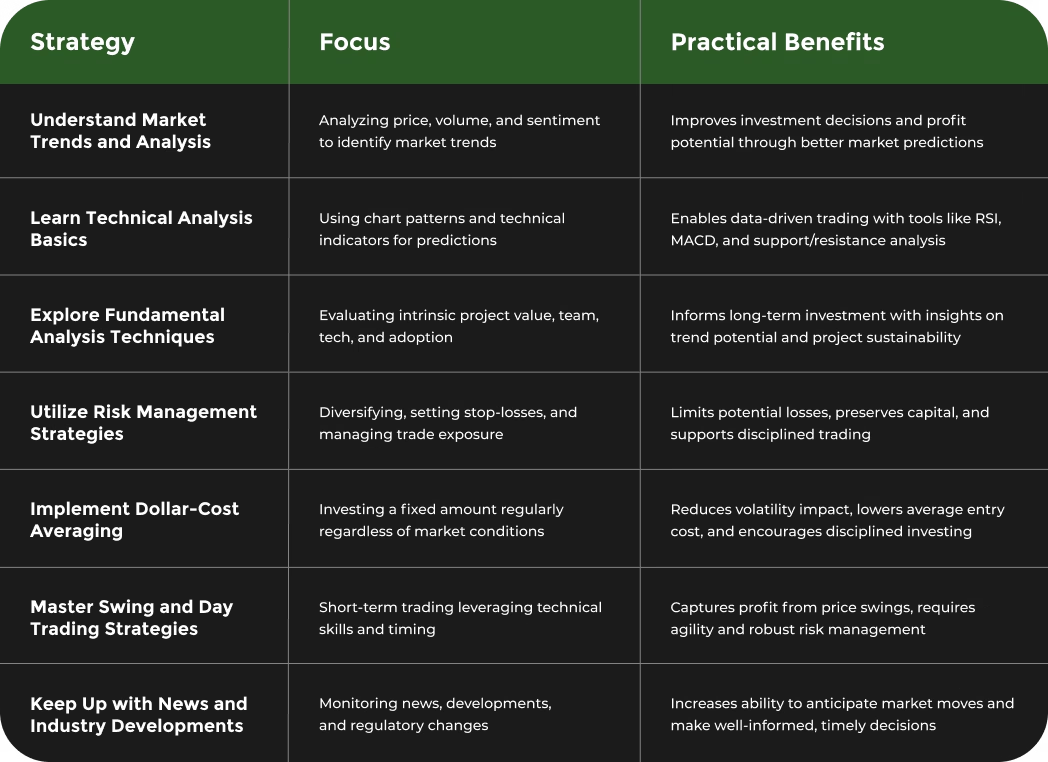
Below is a comprehensive table summarizing the 7 most profitable crypto trading strategies, along with their core focus and practical benefits, providing a clear overview of the article’s key content.
Are you seeking more than just profitable trading techniques? The “7 Most Profitable Crypto Trading Strategies for Success” article highlights the challenges of market volatility, emotional decision-making, and the constant need for effective risk management. While mastering trend analysis and dollar-cost averaging is essential, many traders still struggle with finding reliable ways to translate their knowledge into tangible results.
Imagine pairing your trading expertise with Blockware Solutions advanced mining services. You can apply your disciplined mindset by starting Bitcoin mining instantly, leveraging our on-demand tools, and receiving full support from our experts. Take advantage of our Mining-as-a-Service platform today so you do not just trade on market analysis but also secure real Bitcoin rewards 24/7. Visit Blockware Solutions now and seize your next level in crypto success.
What are the key components of technical analysis in crypto trading?
Technical analysis in crypto trading involves identifying chart patterns, tracking price momentum, evaluating trading volumes, understanding support and resistance levels, and implementing moving averages to make more informed investment decisions.
How does fundamental analysis differ from technical analysis in cryptocurrency trading?
Fundamental analysis focuses on evaluating the intrinsic value of cryptocurrency assets by examining underlying factors such as project team expertise, technological innovation, market adoption, and token economics, while technical analysis relies on statistical trends from trading activity to predict future price movements.
What is Dollar-Cost Averaging and how can it benefit cryptocurrency investors?
Dollar-Cost Averaging (DCA) is an investment strategy where an investor consistently buys a fixed amount of cryptocurrency at regular intervals, reducing the impact of market volatility and lowering the average purchase price over time.
What are effective risk management strategies for crypto trading?
Effective risk management strategies in crypto trading include diversifying your portfolio, setting strict stop loss and take profit levels, never investing more than you can afford to lose, and maintaining emotional discipline during trading to mitigate potential losses.